Can a Protein Garbage Truck Clear Out Mesothelioma Cells

Can a Protein Garbage Truck Clear Out Mesothelioma Cells

Can a Protein Garbage Truck Clear Out Mesothelioma Cells?


Researchers are turning to cell garbage collectors, or the proteasome, in their latest attempt to fight cancer. Scientists have known for years that proteasomes clean out unneeded or damaged proteins, now, they are focusing on lassoing them to attack cancer cells.
Two biochemists, Craig Crews and Raymond Deshaies, began discussing this possibility in 1998 in a bar. Crews, the L.B. Cullman Professor of Molecular, Cellular, and Developmental Biology at Yale University,  has spent his career tinkering, as he calls it, with proteasomes. After years of research, he is on the cusp of a breakthrough treatment that can gobble up the proteins that help cause cancer.
This approach can target diseases that are considered undruggable or resistant to most treatments, like mesothelioma, a rare, terminal cancer. Currently, there is no known cure for the asbestos-caused disease that invariably recurs after building up a resistance to chemotherapy or other anti-cancer drugs that should kill the cancers. Mesothelioma is diagnosed in nearly 3,000 Americans each year.
In a 2010 presentation entitled, “Contemporary Treatment of Malignant Pleural Mesothelioma,” Nicholas J. Vogelzang, MD, Chair and Medical Director, Developmental Therapeutics Committee, US Oncology Research, Comprehensive Cancer Centers of Nevada, noted that proteasome inhibitors were one of “many new agents worthy of study” in the fight against mesothelioma. Dr. Vogelzang is a renowned medical oncologist, cancer researcher and mesothelioma expert.
Crews and Deshaies, Professor of Biology and Executive Officer for Biology Division of Biology & Biological Engineering California Institute of Technology, and founder of the Proteome Exploration Laboratory at the Beckman Institute at Caltech, have built their careers around the proteasome and have spawned several pharmaceutical companies, including Arvinas, focused on harnessing the power of the proteasome.
After rounds of research, Crews and his team found that when the proteasome was “jammed” up, toxic levels of old proteins built up in the cancer cells before the proteosome could clear them out. Without the help in throwing away the discarded proteins, the cancer cells were overwhelmed and died. Crews determined that this could be recreated by an anti-cancer drug.
“You can imagine a small molecule, a drug, that works under this new paradigm, will truly be one that can seek and destroy rogue, disease-causing proteins,” said Crews in a May 18 article in Stat News.
Crews was recently awarded the National Cancer Institute’s Outstanding Investigator Award. Crews, one of 60 U.S. scientists to receive the award, which brings $4.2 million over seven years to support his lab’s research, says the money will make a big difference in his research and could lead to “a second chance” for drugs that were abandoned because “they couldn’t block the function of rogue proteins.”
“This award will help us change the current small-molecule drug paradigm that fails to target 75% of rogue proteins,” Crews said. “Instead, we propose to hijack the cells’ quality-control machinery so that this new class of drugs can bind to and destroy these disease-causing proteins.”
If everything continues on track, Crews hopes that Arvinas, working with Merck and Genentech, will be testing this approach to cleaning up cancer within a year.

I find the best mesothelioma law firm?

I find the best mesothelioma law firm?

How do I find the best mesothelioma law firm?

Most mesothelioma law firms are reputable.  Only a small number have been sued for fraud or malpractice or have been reprimanded by the courts.  Here are some things to consider when evaluating a law firm:

High ratings from the most prestigious independent lawyer rating agencies

There are several independent lawyer rating organizations that rate mesothelioma lawyers and law firms for performance and ethics.  Probably the best known, oldest, and most prestigious is called Martindale-Hubbel.  These ratings are calculated from peer review – other lawyers and judges.  You want a firm with the highest scores and for Martindale-Hubbel the highest score is called “AV Preeminent 5.0 out of 5.” Only a relatively small number of firms have attorneys with the highest ratings.
Awards or accolades from important legal and consumer organizations
A more experienced mesothelioma law firm will have received awards and accolades from various consumer groups and legal organizations.  You may ask about these.

Specific experience with your type of asbestos exposure

Obviously you want to select a mesothelioma lawyer who has experience with your type of asbestos exposure.  This means if you are a 65 year old male who worked construction when you were younger in Philadelphia then you should consider hiring a law firm with prior experience representing males in their 60’s who did construction work in Philadelphia.  Or if you are a 70 year old house wife in Oregon who washed clothes for your husband who is an ex-auto mechanic then you should consider hiring a firm with experience with secondary exposure (asbestos fibers brought home on another’s clothes) in Oregon.  It is important that the law firm you hire has the experience that fits as precisely as possible with you and your type of asbestos exposure.  The reason is because there are many different companies that made many different types of asbestos containing products at different times and distributed these products to different cities and states.  Specialized knowledge is needed in order to demonstrate who is responsible for your asbestos exposure and to build a case that will withstand legal scrutiny.  It can be advantageous to hire a law firm that already has this knowledge.  No one should “learn on your dime.”

Possessing the resources to select the appropriate jurisdiction for your case

Most asbestos cases are heard in state court and each state is different in terms of its speed of processing cases and their historical values.  In addition a legal “nexus” must exist between a plaintiff and defendant in order to file a complaint in a specific jurisdiction.  Since most mesothelioma victims are exposed to a variety of asbestos containing products from different defendants, there may be more than one jurisdiction available.  You want a law firm that has the resources to select the legally appropriate venue that offers you the greatest advantages in speed and value.  Some firms have this flexibility, others do not.

Does the law firm have a successful trial record?

It can be a big advantage to hire a mesothelioma law firm that has recent wins in court.  This is because trial wins send a powerful message to asbestos defendants that they have to pay appropriate settlements or they may have to face your successful mesothelioma trial lawyers in the court room and risk an even bigger loss.  Therefore, you may want to consider hiring a law firm that has many recent wins at trial.
Does the law firm prepare and present cases for individual review to the trust funds? Does the law firm arbitrate with the trust funds if necessary? 
There are over 62 asbestos trust funds with an estimated $25 billion in trust for asbestos victims.  Some of these funds may be available to you.  Today, these trust funds comprise a larger and larger percentage of overall compensation for most mesothelioma victims.  To maximize the value of your claim it can be helpful to treat your claim individually by submitting for individual review and arbitrating to get a better value when necessary. Unfortunately, many law firms do not do this.  This is something you may want to ask about.

Summary

To summarize – here are six important considerations when selecting a law firm:
  1. High ratings from the most prestigious independent lawyer rating agencies
  2. Awards or accolades from important legal and consumer organizations
  3. Specific experience with your type of asbestos exposure
  4. Possessing the resources to select the appropriate jurisdiction for your case
  5. Does the law firm have a successful trial record?
  6. Does the law firm prepare and present cases for individual review to the trust funds? Does the law firm arbitrate with the trust funds if necessary?   
Peritoneal Mesothelioma

Peritoneal Mesothelioma

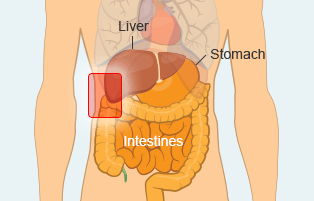
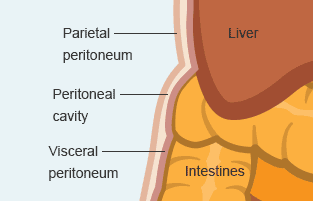
Peritoneal mesothelioma is a form of cancer that affects the lining of the abdomen (the peritoneum). It is caused by the ingestion of asbestos fibers.

What is Peritoneal Mesothelioma?

Peritoneal mesothelioma accounts for 20 to 25 percent of all mesothelioma cases. It is the most common diagnosis after pleural mesothelioma. Peritoneal patients have longer life expectanciesthan those with other types of mesothelioma. Some studies report patients living upwards of 5 years after cytoreductive surgery.

How Is Peritoneal Mesothelioma Treated?

  • Peritoneal Mesothelioma Icon

    Cytoreductive Surgery

    This is the only surgical option available to those with a peritoneal diagnosis. This surgery has high success rates when it is combined with chemotherapy.
  • Mesothelioma Chemotherapy Treatment Icon

    Chemotherapy

    This is the most common treatment for peritoneal mesothelioma. It is sometimes administered directly to the abdomen during surgery.
  • Mesothelioma Radiation Treatment Icon

    Radiation

    This is the least invasive treatment option for peritoneal mesothelioma patients. Radiation may be delivered during surgery as well.


Symptoms

A patient with peritoneal mesothelioma may not experience symptoms early on. If symptoms are evident, they may be mistaken for other illnesses. One common symptom in many peritoneal mesothelioma patients is fluid pockets called ascites, which often cause the stomach region to bulge outward. Other symptoms include:
  • Abdominal Pain
  • Loss of Appetite
  • Blood Clots
  • Fatigue
  • Fluid Buildup (Ascites)
  • Nausea
  • Abdominal Swelling
  • Fever or Sweating
  • Tissue Lumps in the Abdomen
  • Anemia
  • Seizures
  • Bowel Problems
In most cases, peritoneal mesothelioma does not spread to the lungs. It has been shown to spread to the other abdominal areas, such as ovaries, liver, or intestines. This metastasis often causes it to become discovered and sometimes misdiagnosed. Symptoms of stomach pains or ascites sometimes results in a misdiagnosis of hernias or a simple stomachache.
Similar to pleural mesothelioma, peritoneal mesothelioma is most common in males between the ages of 50-69 years old. Men who have the highest rates of peritoneal mesothelioma are veteransand those with occupational exposure to asbestos.
Peritoneal mesothelioma does not usually spread to the lymphatic system (lymph nodes) or blood stream. It usually metastasizes in large masses in the same areas where it originated.

How Does Peritoneal Mesothelioma Develop?

  • 1
    Asbestos fibers are ingested. This can happen after being inhaled, coughed up, and then swallowed.
  • 2
    The body attempts to filter and remove them, but the sharp fibers can lodge into the lining of the abdomen (peritoneum). The fibers irritate the peritoneum and can cause genetic damage to cells.
  • 3
    Genetic damage can keep cells from receiving important signals about when to stop replicating. This causes unchecked cell division and the formation of a malignant tumor. It can take decades for this process to happen.
Peritoneal Mesothelioma Body
Peritoneal Mesothelioma Abdomen
Peritoneal Mesothelioma

Diagnosis

CT scans or MRI test results may not show the presence of mesothelioma. It is often confused with abdominal distension (gas). X-rays are the most commonly used imaging tool to diagnose peritoneal mesothelioma.
Doctors may also use a technique called peritoneoscopy. During this procedure, a surgeon makes a small incision on the patient’s abdomen and uses a small camera to explore the abdomen. There is also a tool on the camera that helps to extract tissue on the peritoneum to test for mesothelioma.
Doctors do not use a standard staging system when diagnosing peritoneal mesothelioma.
Generally, before the tumors start to spread, peritoneal mesothelioma is centralized to the abdomen. As it progresses to stage 2, the mesothelioma may spread more but is still contained in the peritoneum. In the final stage, stage 4, the mesothelioma has spread to other organs, such as the liver and colon.

Treatment

Treatment options are dependent on the stage a peritoneal mesothelioma patient is diagnosed with. There are more curative treatment options, like cytoreduction surgery, for patients with earlier stages.
Patients in the later stages may receive palliative treatments, like radiation or chemotherapy. Another palliative treatment option may be a paracentesis to drain the fluid buildup in the abdomen.
The most successful treatment of peritoneal mesothelioma has been the combination of cytoreduction surgery and HIPEC (heated intraperitoneal chemotherapy). The cytoreduction removes most of the cancerous tumor, and HIPEC is used to kill the remaining cells.
This treatment has been successful in patients with good general health. Some patients have lived as long as 7 years after having this surgery.
Find a mesothelioma specialist offering this treatment option using our free Doctor Match program.

Surgery

Cytoreduction Surgery

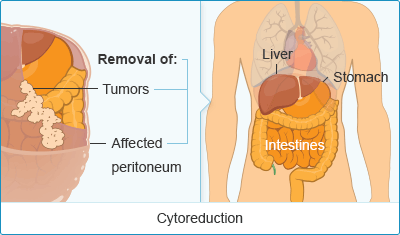
Mesothelioma Cytoreduction Surgery TreatmentCytoreduction is also referred to as “debulking.” The goal of cytoreduction is to remove as much of the tumor as possible, though it is often not possible to remove the entire tumor. The peritoneum (lining of the abdomen) and/or some other organs may need to be removed. It is usually performed in patients with stage 1 or 2 peritoneal mesothelioma.
Recovery can take anywhere from 7 to 13 days. One study showed a majority of patients experiencing nausea up to 13 days after their surgery. Regular activities (such as eating, drinking, and mobility) are typically reestablished within 11 days after the cytoreduction and HIPEC.

Heated Intraperitoneal Chemotherapy (HIPEC)

Heated intraperitoneal chemotherapy (HIPEC) is used in patients who have cancers of the abdomen. High doses of chemotherapy are intended to kill any remaining mesothelioma cells left after a cytoreduction surgery. HIPEC is a heated and sterilized chemotherapy treatment.
Dr. Paul Sugarbaker led the way in innovating cytoreduction with HIPEC for patients with peritoneal mesothelioma.
The side effects of this chemotherapy are less than those of regularly administered chemotherapy. At the end of the 60-90 minutes, the chemotherapy is washed out of the body.
  • Also referred to as “hyperthermic intraperitoneal chemo” or simply “hot chemo”
  • Usually done after cytoreduction
  • Administered both during surgery (most effective) and after using an abdominal catheter

Secondary Treatment

Chemotherapy

Peritoneal mesothelioma patients may be given a combination of Alimta and cisplatin, the same treatment given to pleural patients.
In 2009, a patient went in for an unrelated procedure and signs of peritoneal mesothelioma were found. The patient was given a combination of Alimta (500 mg) and cisplatin (80 mg).
After six cycles of chemotherapy, all signs and markers of the peritoneal mesothelioma were gone. Six months later, CT scans showed no changes or reoccurrence regarding the mesothelioma. After 4 years, the patient was alive with no signs of disease progression.
Studies show the normal survival rate of patients with peritoneal mesothelioma is around 7.6 months if they do not receive chemotherapy. Forty-one percent of patients who were given the combination experienced improvement, while 17% showed satisfactory results with cisplatin alone.
On average, patients who received the combination of Alimta and cisplatin lived 12.1 months longer compared to 9.3 months on just cisplatin.
Studies are also testing the effectiveness of the drugs vinorelbine and gemcitabine in combination with cisplatin.

Radiation

For many peritoneal mesothelioma patients, radiation is not usually effective. Radiation may shrink tumors before or after a cytoreduction, but there have been no reported cases of eradicated mesothelioma by solely using radiation. A mesothelioma specialist can determine if radiation is appropriate based on their patient’s specific diagnosis.

Prognosis

Although there isn’t currently a cure for peritoneal mesothelioma, many patients have a hopeful prognosis. The median survival time for patients who have not had the cytoreductive surgery is about a year; however, in patients who have had the surgery, survival times increase by up to five years. There have been cases of long-term survivors who have been in remission for over fifteen years. The most successful cases are those whose mesothelioma is detected in the earlier stages and begin treatment immediately. Most of theses cases include a cytoreductive surgery and HIPEC.
original post found here in the below link
 Mesothelioma Survivors Guide.